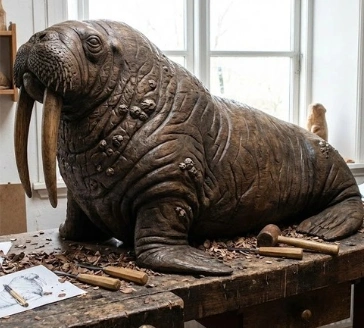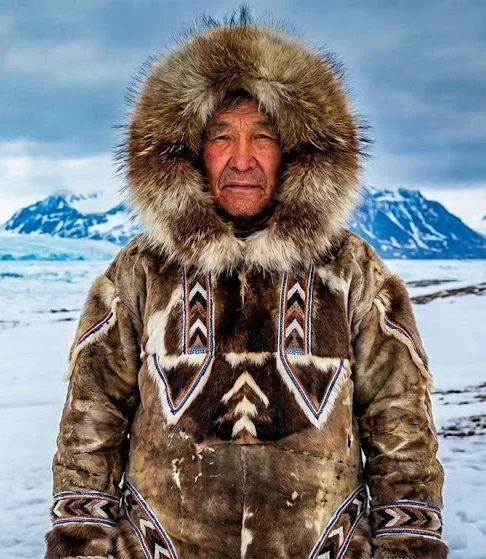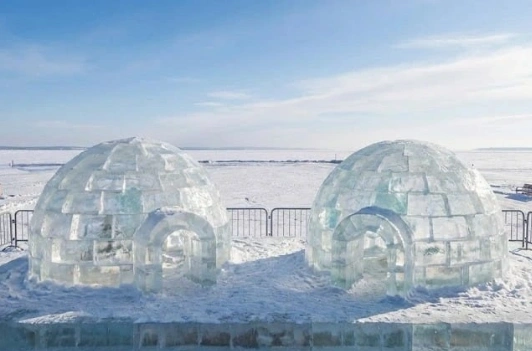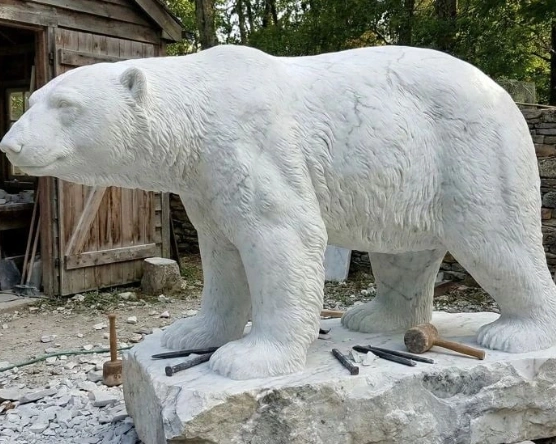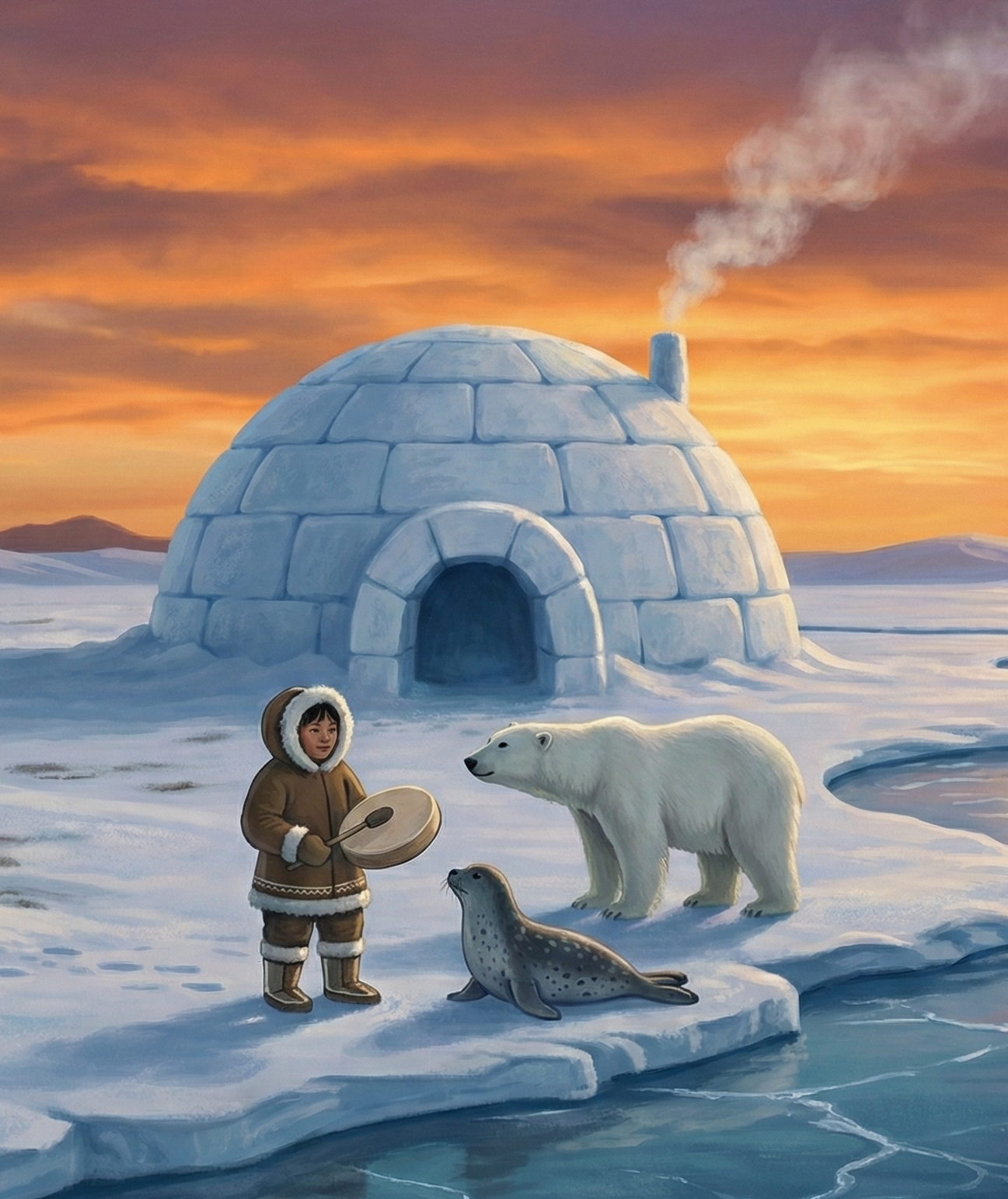
Located in Foxe Basin, Igloolik is widely considered the cultural hub and geographic center of Nunavut. With a history spanning over 4,000 years, this remote hamlet is a vibrant leader in preserving Inuit traditions through art, storytelling, and film. The region is also renowned for its abundant wildlife, including walrus, seals, whales, and polar bears.
Artcraft
Sculpture
Igloolik Artcraft is centered on the tradition of Inuit sculpture, reflecting the community’s cultural importance in Nunavut. Iglulingmiut artists are known for realistic works depicting the hunt, mythology, and emotional intensity. Carvings primarily use local, often unpolished, dull grey stone (or green stone), showcasing a naturalistic style. Master carvers like Esa Kripanik depict Arctic wildlife and etch surface drawings, reflecting their deep knowledge of the land.
Other Art Forms
While sculpture is paramount, the wider Inuit art tradition includes:
- Printmaking (prints, drawings).
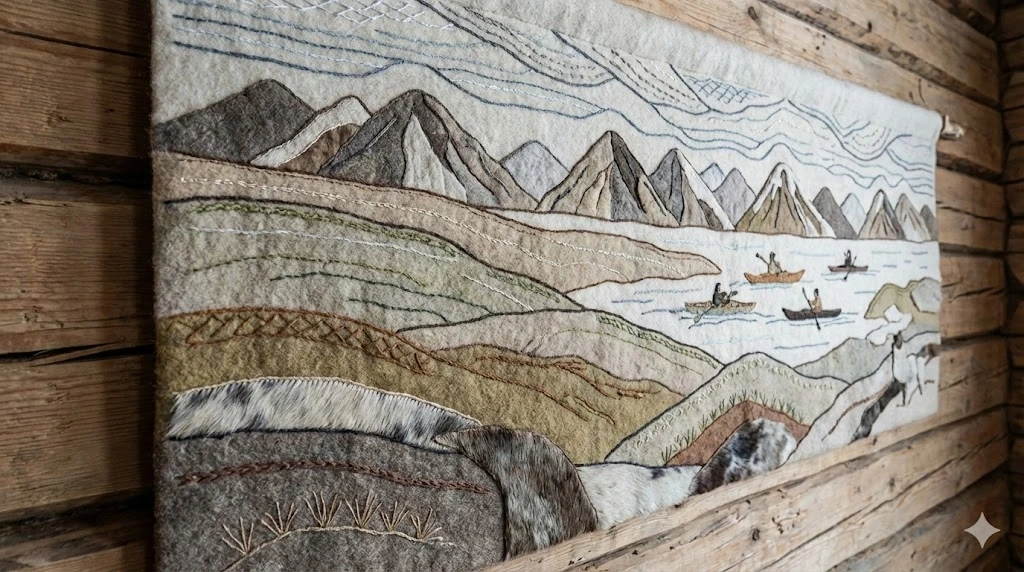
- Textile Arts (wall hangings, beadwork, and detailed traditional clothing like the amauti made from caribou skin).
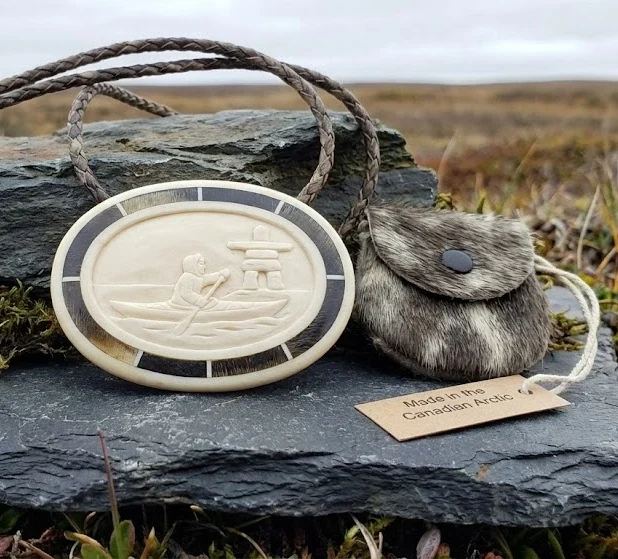
- Jewelry and carved utilitarian objects.
Education & Innovation
Education in Igloolik seeks to bridge Inuit knowledge with modern subjects, teaching in both Inuktitut and English, and preserving culture through land-based learning and elder mentorship. Igloolik is also a hub for Inuit innovation, notably via the Igloolik Isuma Productions film collective and the Artcirq circus group. These initiatives use contemporary arts to preserve narratives, address modern challenges, and share the Iglulingmiut perspective globally, rooting innovation in cultural resilience.
Elders & Community Wisdom
Elders
Elders (isumatait) are revered in Igloolik as the living repositories of Inuit culture and Traditional Ecological Knowledge (TEK). They are vital for transmitting practical skills (hunting, navigation) and the community’s oral histories and language. Serving as moral and spiritual guides, Elders advise on social conduct and ensure cultural continuity, forming the bedrock of the Iglulingmiut social structure. Feature their insights, stories, and roles in guiding the community.
Intergenerational Learning
Intergenerational learning is key to the cultural survival of the Iglulingmiut, ensuring the continuity of Traditional Ecological Knowledge (TEK), language, and values. Youth learn from elders through shared activities and mentorship. This dynamic exchange occurs informally, primarily between Elders (isumatait) and youth during activities like hunting, preparing food, and storytelling. It transfers essential survival skills while preserving and adapting millennia of Arctic wisdom
Feasts & Festivals
Quviasukvik (Inuit Winter Feast)
This is a historically significant winter feast that celebrated the coming year, marked the new sun after the winter solstice, and traditionally involved appeasing spirits for good luck in the hunting season. Today, it has merged with and is often celebrated around Christmas and New Year’s.
Return of the Sun Festival Feast
Held in mid-January, this major five-day festival in Igloolik celebrates the re-emergence of the sun after weeks of total darkness. Feasts of local foods are central to the celebration.
Hamlet Celebration Feasts
Held annually in early April to commemorate the date Igloolik officially became a hamlet. These feasts of local foods are often accompanied by traditional Inuit games.
Nunavut Day Feasts
Celebrated on July 9th, these territorial holidays include community feasts, barbecues, and cultural activities.
General Community Feasts
Community meetings, or mark cultural festivals such as the Rockin’ Walrus Arts Festival in the summer.
Feasts for Life Events
Traditionally, feasting also occurs for personal milestones, though these are often smaller family or close-knit gatherings:
- Feasts for a boy’s first kill (hunting rite of passage).
- Feasts are associated with naming ceremonies and honoring the dead.
Food & Recipes
Country Foods
The “Walrus Capital” (Foxe Basin)
Communities: Igloolik is one of the hamlets located along the Foxe Basin that has access to massive herds of walrus that others do not.
The Specialty: Walrus Igunaq. While many Inuit ferment meat, Igloolik is famous for fermenting walrus meat (aging it in stone caches).
The Difference: In other parts of the Baffin region, walrus is rare or harder to hunt. If you are eating fermented walrus in Iqaluit, it was likely gifted or shipped from Igloolik or Hall Beach.
Harvesting Clams & Mussels
The Igloolik Method, “Let the Walrus do the work“: While people in Igloolik don’t climb under the ice for clams, they still eat them. They just use a different “delivery system”: The Walrus.
Igloolik is the “Walrus Capital.” Walruses are bottom feeders that eat thousands of clams (uiloq) a day.
The Harvest: When hunters in Igloolik catch a walrus, they often open their stomach (nirukkaq). Because the walrus swallow’s clams whole (siphons and all) or just the meat, the stomach is often full of freshly shucked, pre-digested clams.
The Eating: These clams are considered a delicacy. They have been “processed” by the walrus (which removes the shell) and preserved by the animal’s body heat and enzymes.
The Difference: In Kangiqsujuaq, humans risk their lives to get the clams. In Igloolik, the walrus does the diving, and the humans harvest the walrus.
Inuit Games
Inuit games are culturally significant physical contests, like the One-Foot-High Kick and Finger Pull, historically used to train for survival in the Arctic. These challenging activities build strength, endurance, and resilience essential for hunting and cold resistance. Today, these games are celebrated at events like the Arctic Winter Games to preserve Inuit physical culture and traditional knowledge.
Language & Storytelling
Inuktitut Language
Inuktitut is the cornerstone of Inuit identity and culture, and the mother tongue for most Iglulingmiut. This polysynthetic language reflects the Arctic worldview, condensing complex concepts (especially about snow, ice, and hunting) into single words. Traditionally oral, Inuktitut is now written using Canadian Aboriginal Syllabics and Roman Orthography, with its vitality actively maintained through cultural initiatives.
Oral Histories & Legends
Inuit oral histories and legends (unikkausivut) are the primary vessel for Traditional Ecological Knowledge (TEK), moral guidance, and historical memory for the Iglulingmiut. Narrated by Elders, these stories convey survival skills and spiritual teachings. Core legends, such as Atanarjuat, embody traditional laws and resilience, forming a living archive actively preserved and reinterpreted today.
Modern Life & Resilience
Contemporary life in Igloolik balances ancestral heritage with modernity. Although the community faces challenges like the high cost of living and the impact of climate change on traditional subsistence, the Iglulingmiut demonstrates strong resilience. They rely on kinship structures and cultural initiatives like Artcirq to adapt to change and ensure the vibrant survival of their Inuktitut culture and way of life.
Music & Expression
Throat Singing
Inuit throat singing (katajjaq) and drumming (qilaut) are fundamental to the performing arts of the Arctic, serving distinct yet complementary cultural roles. Throat singing is traditionally a unique vocal game performed by two women, producing complex, rhythmic, and resonant sounds—often imitating the sounds of the natural world (wind, water, animals)—through deep inhalation and exhalation.
Drumming
Drumming involves the use of the qilaut, a large, shallow, hand-held drum made of a caribou or seal skin stretched over a wooden hoop. Unlike Western drumming, the player strikes the hoop and frame, not the skin, to produce a deep, resonating beat that accompanies dancing and storytelling. Together, these practices are vital for celebration, competition, cultural preservation, and spiritual expression.
Performing Arts
Rockin’ Walrus Arts Festival
This festival celebrates Igloolik’s creative community. An annual Igloolik festival of music, dance, acrobatics, and theatrical performances is held in mid-to-late June. Traditional Inuit cultural activities and the performing arts are showcased every spring and summer in Iqaluit at two very popular festivals that feature many amazing musical artists.
Artcirq
A unique and celebrated Inuit circus performance collective based in Igloolik, Nunavut, Canada. Co-founded in 1998 by Guillaume Saladin and local youth, it stands as the world’s only Arctic circus. Read more…
Political Advocacy
Political advocacy in Igloolik focuses on Inuit self-determination and protecting their Aboriginal rights. Iglulingmiut actively engage in governance through the Hamlet Council and the Qikiqtani Inuit Association (QIA) to secure resources for housing and infrastructure. Local voices are crucial in advocating for climate change mitigation and ensuring traditional knowledge is prioritized in resource development and environmental stewardship.
Spirituality & Beliefs
Inuit Spirituality
Traditional Inuit spirituality, particularly among the Iglulingmiut, is fundamentally animistic, meaning the Inuit believe that all things—living and non-living—possess a spirit or life force (anirniq). This worldview is entirely shaped by the unforgiving yet life-sustaining Arctic environment, demanding profound respect for nature..
Ceremonies & Practices
The relationship between humans and the spirit world is maintained through strict adherence to taboos (Pinguangat) and rituals. Taboos were strict rules governing daily life, particularly the required separation of land and sea products (e.g., a ban on sewing caribou hides after a marine animal hunt). Breaking these rules would anger the spirits, thus threatening the community’s survival. Today, while many Inuit are Christian, the underlying principles of respect for the environment and certain cultural taboos often persist.
Traditional Knowledge & Way of Life
Igloolik Research Centre
Plays a crucial role in preserving Inuit traditional knowledge, advancing technology, and conducting research in climatology and seismic activity. Read more…
Connection to the Land, Water, and Ice
The Iglulingmiut (Igloolik Inuit) have a profound connection to their Arctic homeland’s land, water, and ice. Their culture and identity are shaped by the sea ice, which is crucial for travel and hunting marine mammals like the
ringed seal. This challenging environment is their teacher; their Traditional Ecological Knowledge (TEK) – a vast, practical understanding of ice, weather, and currents—allows them to sustain life. This relationship demands deep respect, historically reflected in practices like moving camps to prevent land overuse.
Subsistence Practices
The Iglulingmiut (Igloolik Inuit) rely on hunting and fishing tied to the Arctic’s seasonal cycles. Sea ice is crucial for hunting marine mammals like ringed seals, bearded seals, and walrus. In open water, they hunt narwhal and beluga
whales. On land, they pursue caribou, muskox, and polar bear. They also harvest Arctic char and cod year-round. These practices are vital for both sustenance and the transmission of Traditional Ecological Knowledge (TEK), ensuring cultural continuity.
Seasonal Rhythms
The annual life in Igloolik is defined by sharp seasonal rhythms. The long, dark winter is dominated by solid sea ice for travel and hunting. Spring brings back the sun and daylight, leading to the crucial floe edge hunting season. The brief summer offers 24-hour daylight and open water for boat travel. Autumn quickly returns cold and darkness, signaling the freeze-up and preparation for the deep winter, dictating the community’s entire subsistence cycle.
Visual Arts
Isuma Productions
Isuma Productions is the producer of the award-winning Inuit-language Fast Runner Trilogy:
- Atanarjuat The Fast Runner
- The Journals of Knud Rasmussen
- Before Tomorrow
Nunavut Independent TV Network (NITV), Arnait Video Productions, Artcirq; ImagineNATIVE Film+Media Arts Festival, Vtape, Native Communications Society of the NWT (producers of the historic TV series
Our Dene Elders), and other non-profit agencies. Read more…
Arnait Video Productions
The goal of Arnait Video Productions is to promote and value the unique culture and voices of Inuit women, and to create dialogue with Canadians of all origins. In a time when the Arctic is receiving more attention, we want to represent Inuit women’s perspectives and values within larger national and international discussions. Read more…